
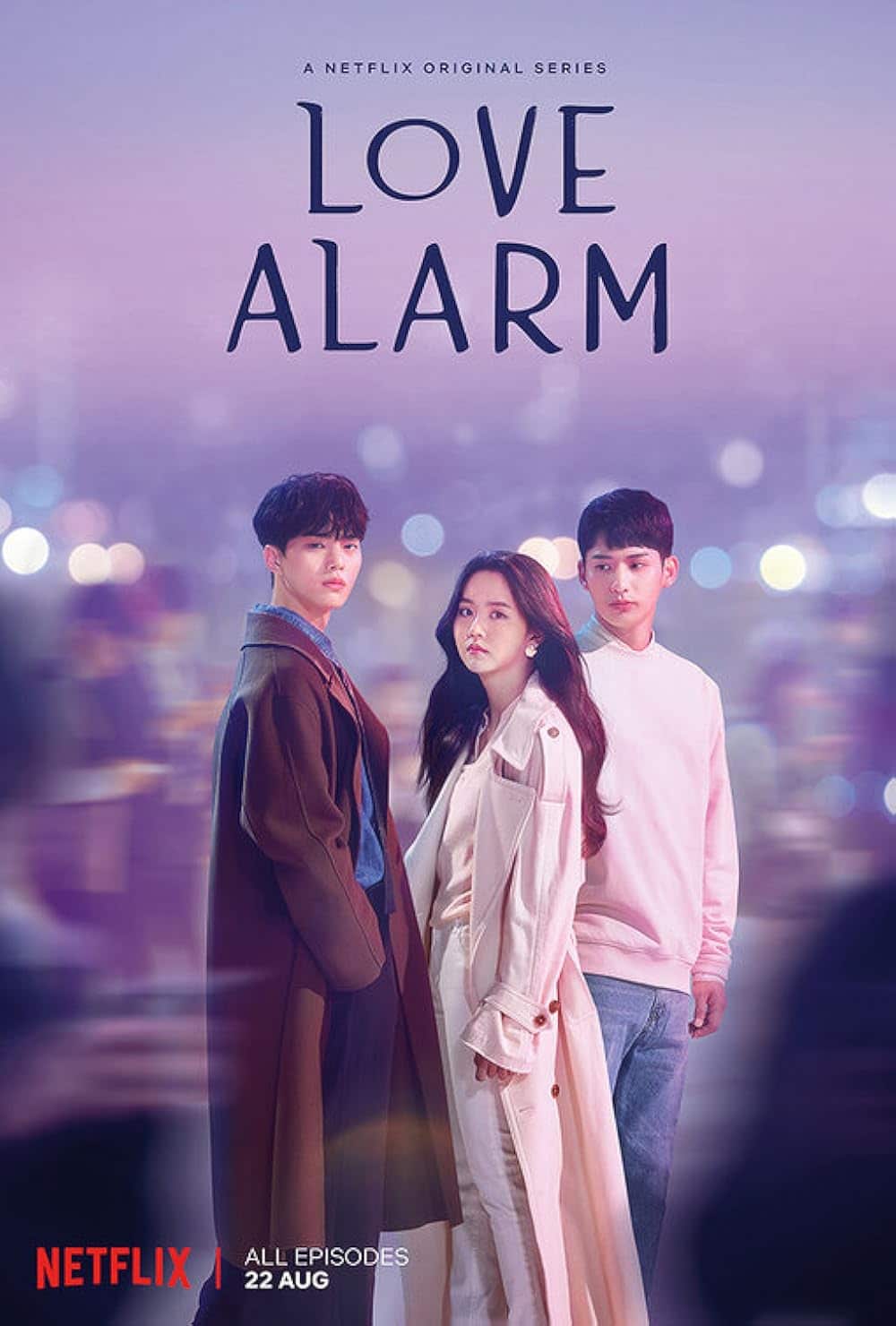
Hello, everyone! How’s everything? Today, I’m excited to share my thoughts on the drama Love Alarm, which has enchanted young viewers globally with its unique take on technology-driven romance, emotional intricacies, and the difficulties of teenage love in today’s digital landscape.
Advertisements
First airing on Netflix on August 22, 2019, and wrapping up its second season on March 12, 2021, the series consists of 14 episodes, each averaging around 60 minutes. Adapted from the well-known webtoon by Chon Kye-young, this Korean romantic drama marked Netflix’s inaugural original Korean series, featuring Kim So-hyun, Song Kang, and Jung Ga-ram in a love triangle that delves into the complexities of contemporary romance.
Set in a universe where the groundbreaking Love Alarm app alerts users when someone within a 10-meter radius harbors romantic feelings for them—without disclosing the identity—this seemingly straightforward idea weaves a complex network of relationships, misunderstandings, and emotional discoveries, challenging traditional concepts of love and attraction.
This drama addresses themes of youthful romance, societal pressures, familial trauma, and the intersection of technology with human emotions. The tone skillfully balances teen romance with profound psychological undertones, investigating how external approval can influence self-esteem and relationships. Each episode explores the complications that arise when private emotions become public knowledge, presenting both chances and hurdles for genuine connections.
Kim Jojo: The Girl Struggling to Feel
Kim So-hyun gives a captivating performance as Kim Jojo, a high school student grappling with family tragedy and financial struggles, who finds herself entangled in a love triangle after the launch of the Love Alarm app. Jojo’s character symbolizes the challenges young people face in understanding their feelings while managing societal expectations.
Jojo’s inability to trigger anyone’s Love Alarm transforms into a central enigma that fuels much of the series’ emotional intensity. Her journey involves uncovering the psychological barriers she has erected around her heart due to past traumas, making her character arc both relatable and deeply affecting. Kim So-hyun infuses the role with vulnerability and resilience, illustrating how young individuals often shield themselves from love even when they yearn for it.
The transformation of Jojo from a girl who is afraid of emotional attachment to someone who learns to accept vulnerability is pivotal to both seasons, with her decisions impacting not just her own happiness but also the lives of those who care for her.
The Love Triangle: Sun Oh vs Hye Young
Song Kang as Lee Sun Oh and Jung Ga-ram as Hwang Hye Young craft one of K-drama’s most emotionally intricate love triangles. Sun Oh, the popular and self-assured student, embodies passion and fervor, while Hye Young, Jojo’s childhood friend, represents loyalty and unwavering affection.
The Love Alarm app complicates their dynamics by creating scenarios where feelings are laid bare before the characters are prepared to confront them. Both young men genuinely care for Jojo, yet their differing approaches to love and life introduce significant contrasts that transcend typical romantic rivalry.
Song Kang and Jung Ga-ram enrich their characters, sidestepping the usual “bad boy vs good boy” clichés by highlighting how both individuals carry their own emotional scars and growth journeys. Their camaraderie adds another layer of complexity, as they must navigate their rivalry for Jojo’s affection while preserving their friendship.
The Technology Challenge: Love in the Age of Tech
Love Alarm serves as both a narrative tool and a social critique on the influence of technology in contemporary relationships. The app’s capacity to unveil hidden feelings generates dramatic tension while prompting inquiries about privacy, genuineness, and the essence of romantic attraction.
The series investigates the implications of internal feelings becoming external data, questioning whether technology can genuinely quantify something as intricate as love. The app symbolizes the impact of social media on young people’s relationships, illustrating how external affirmation can both aid and hinder genuine emotional growth.
In its second season, the introduction of “shields” that can prevent the app’s functionality adds another dimension to the examination of how individuals manage their emotional vulnerability in a tech-driven environment.
Season Two Development: Maturity and Closure
The second season, released on March 12, 2021, focuses on the characters’ evolution four years later as they navigate the challenges of young adulthood. The time leap allows the show to delve into how their high school experiences influenced their adult relationships and career paths.
Season Two explores the psychological dimensions of the Love Alarm phenomenon more profoundly, tackling themes of emotional healing, forgiveness, and the journey to love authentically rather than seeking external validation. The resolution of Jojo’s emotional barriers and the love triangle offers closure while keeping the series’ emphasis on personal growth rather than mere romantic conclusions.
Success on Netflix: A Groundbreaking Digital Romance
Love Alarm garnered a 6.5 rating on IMDb and stands out as Netflix’s first original Korean series, setting the stage for the platform’s future K-drama triumphs. The series resonated particularly with younger viewers who related to its examination of social media’s effects on relationships and self-perception. With 14 episodes spanning two seasons, the show offered a complete narrative arc that facilitated character development and thematic exploration. Critics noted the series’ innovative premise and Kim So-hyun’s outstanding performance, though some pointed out that the pacing could be inconsistent. Love Alarm succeeded in sparking conversations about technology’s role in modern love and the significance of genuine emotional connection in an increasingly digital landscape.
If you’re a fan of teen romance that incorporates inventive concepts, emotional depth, and insights into how technology shapes modern relationships, Love Alarm is an ideal series to binge-watch on Netflix. This Korean original will challenge you to consider how well we truly understand our own hearts in the digital age.
Love Alarm presents a thought-provoking examination of youthful love in the digital realm, affirming that the most crucial connections emerge when we are courageous enough to be emotionally genuine.
Series Overview:
Number of Episodes: 14 episodes over 2 seasons (Season 1: 8 episodes, Season 2: 6 episodes) Platform: Netflix Rating: 6.5/10 (IMDb) Genre: Teen Romance, Drama, Sci-Fi Main Cast: Kim So-hyun (Kim Jojo), Song Kang (Lee Sun Oh), Jung Ga-ram (Hwang Hye Young) Conflicts: Emotional trauma, societal pressure, the impact of technology on authentic relationships